Art Based CoachingPetaling Jaya Register
Future Art Lifelines · Oct 2026 – Mar 2027 · Petaling Jaya

Your life story isn’t only a memory. It’s in how you stand, hold, and shape things.

Five afternoons across six months, working with clay, drawing, movement and position — so the patterns you’ve been carrying become something you can see, and change.

Three folded paper forms — one resting, one in flight, one travelling fast Folded, unfolded, folded again — the same sheet of paper
When
Five afternoons, Oct 2026 – Mar 2027
2:30 – 6:30 pm
Where
Art Based Coaching Studio
Seksyen 17, Petaling Jaya
Curriculum
Prof. Hildrun Rolff
Facilitated live by
Honey Khor
Series fee
From RM 1,480
early bird, in a pair
What this is actually for

You already understand your patterns. You’re still living inside them.

Your life leaves marks. Not only memories — habits, postures, reflexes you never chose. And you’re not confused about them. You could explain your own dynamic over coffee: where it started, why it holds, what it costs you. And next month you’ll do it again.

Being articulate is not the same as being free.

That’s the thing nobody says to people who are good with words. Talking can quietly become a way of managing a pattern instead of moving it. Every conversation makes you more articulate about something you’re still standing in the middle of. It looks like insight. It works like a holding position.

Clay doesn’t negotiate.

Your hands do the thing before your explanation catches up — you press, you hold, you correct, you smooth it over again — and there it is on the table in front of you, without your permission. It stops being a story you tell about yourself and becomes an object you can walk around.

Then you get to rehearse.

Change one thing. More pressure. Slower. Stand somewhere else. You try a different response here, in material, before you have to try it in your actual marriage, your actual business, your actual client session. Most people never rehearse. They repeat, and hope.

Something you can see Five pieces that hold your patterns in front of you rather than in memory. They go home with you.
Something you can repeat A method you can use alone, at three in the morning, without a facilitator in the room.
Something you can use at work For practitioners: five processes you can bring to clients stuck in the same verbal loop — and one intervention you build yourself.
Evidence, not a high A month between each session, so you find out whether what surfaced survives contact with an ordinary Tuesday.

Who shouldn’t come.

  • —
    Anyone hoping to be fixed.Nothing here does that to you.
  • —
    Anyone wanting to make something beautiful.That isn’t the point, and it gets in the way.
  • —
    Anyone who mainly wants to keep talking about it.There’ll be plenty of talking. It just won’t be first.
Why five afternoons, spread across six months

A story doesn’t reorganise itself in a weekend.

The studio, before anyone arrives

You’re used to being the one who holds things. For other people, mostly. And you’ve probably noticed the cost of that showing up somewhere — in your sleep, your patience, your decisions.

Most programmes hand you an intensive. Everything at once, then nothing. You leave lit up, and about a fortnight later the old response comes back with everything it’s got, and you quietly conclude the problem was you.

It wasn’t you. Four hours can show you something. Four hours cannot change you. What changes you is what happens in the four weeks afterwards — and no classroom, however good, can give you that.

So we built the gap in on purpose. Five afternoons, roughly a month apart, October to March. The room opens something. Your ordinary week is where it either holds or doesn’t. Then you come back and we work with what actually happened.

Your life supplies the material

Between one afternoon and the next, something will happen. A difficult conversation. A decision you keep postponing. A week where the old pattern wins. You bring that in — real, recent, still warm. Nothing hypothetical, nothing invented for the exercise.

You get to try, fail, and come back

Try something new in the last hour of a five-day intensive and there’s nowhere to bring the result. Here, if it doesn’t work in November, you return in December to someone who knows you and remembers what you were working on. Four more attempts. That’s what makes a change durable.

Nothing floods you

This work surfaces more than most people can absorb in one sitting. Spacing isn’t a scheduling convenience — it’s how the material stays workable, and how you stay steady while you work with it.

And you can actually attend

Five weekdays off is the reason the people who most need this never come. Four Saturday afternoons and one public holiday, you can do. The group also stops being strangers by about the third one — and being genuinely witnessed does something a weekend cannot.

By the last afternoon in March you will have been at this for six months. That is long enough for other people to notice.

The five afternoons

One question at a time.

Each afternoon follows a single question and reaches a clear ending. Each one is complete in itself. Together they move from what your body already holds towards what you’re able to do with it.

Saturday 17 October 2026 · 2:30–6:30 pm

The Body Holds the Story

How does my body already hold my story?

Clay, posture and simple sculptural work. You notice how you stand, hold and shape — and then change one small thing, so another possibility appears in the material and can be tested.

You leave withA practical way of reading what your life has left in your body, through clay, posture and form.
Saturday 14 November 2026 · 2:30–6:30 pm

Patterns, Uncertainty and Choice

How do I respond when I can’t control what happens?

Drawing, rhythm and an unpredictable brush bring automatic responses into view — correcting, holding, repeating, withdrawing, adapting. Change one parameter at a time and the difference becomes visible and physical.

You leave withA repeatable process for recognising a pattern and testing another response.
Saturday 12 December 2026 · 2:30–6:30 pm

Relationship as an Embodied System

How do I take my place in relation to others?

Proximity, distance, expectation, responsibility. Bodily and artistic constellations show how a relational system is arranged — and a small shift in position lets you see what changes across the whole field.

You leave withA structured method for exploring relational position and systemic change.

A longer gap follows the third afternoon. It carries you through the year end, Chinese New Year and the first weeks of Ramadan — and the fourth afternoon lands on a public holiday, so nobody has to take leave for it.

Wednesday 24 February 2027 · public holiday · 2:30–6:30 pm

The Adult Self and Future Direction

What in me is allowed to lead today?

Through image, form and arrangement you place what belongs to your history, what can step back, and what can lead the next part of life. Your Future Art Lifeline gives that direction a visible form.

You leave withA personal Future Art Lifeline connecting where you’ve come from, where you stand now, and what leads next.

This afternoon falls during Ramadan. We close the session at maghrib and break fast together for anyone who is fasting. The date follows the public holiday and will be confirmed once it is gazetted.

Saturday 27 March 2027 · 2:30–6:30 pm

From Experience to Intervention

How does experience become method?

A psychological or relational process first shows itself as movement — it pushes, stops, circles, contracts, avoids. You translate that movement into line, gesture, colour or material, then build and present an intervention for your own field of practice.

You leave withAn intervention you designed yourself, and a clear process for adapting it in practice.

Add all five to your calendar

All five afternoons in one file. Works with Google Calendar, Apple Calendar and Outlook, and each session carries a reminder two days before and one on the morning itself.

1 · The body
2 · Patterns
3 · Relationship
4 · Direction
5 · Method
How an afternoon runs

The same shape, every time.

You always know where you are. The rhythm holds the group; the question changes the character of the day.

1 Arrival and bodily orientation
2 Guided artistic experience
3 Observation and exchange
4 Short theoretical orientation
5 Variation and application
6 Integration and closing
Before you talk yourself out of it

You don’t need to be good at art.

Nothing here is about making something beautiful. Nothing is judged, marked, or shown to anyone. The material is a way of seeing — it shows you things that talking alone tends to talk around.

A line. A colour. A shape you press into clay. These carry meaning whether or not you can draw.

Who it’s for

People who hold a lot for others — and people ready for a different next chapter.

Therapists, counsellors and coaches

You want art-based methods you can actually use, and you know you can’t offer clients a process you’ve never been inside yourself.

Educators and facilitators

You work with groups and want something beyond discussion — a way in that doesn’t depend on people finding the right words first.

Entrepreneurs and leaders

You’re capable on the outside and stretched thin underneath, and you sense the current way of working can’t continue as it is.

Anyone in transition

Loss, separation, illness, relocation, a career shift, midlife questions. You want to make sense of what’s happening without having to explain it all out loud.

Who you’ll be working with

This work asks a lot of the person holding the room.

The real question isn’t whether someone is qualified on paper. It’s what happens when something difficult surfaces on a Saturday afternoon and you need the person in front of you to have seen it before. Here’s why these two.

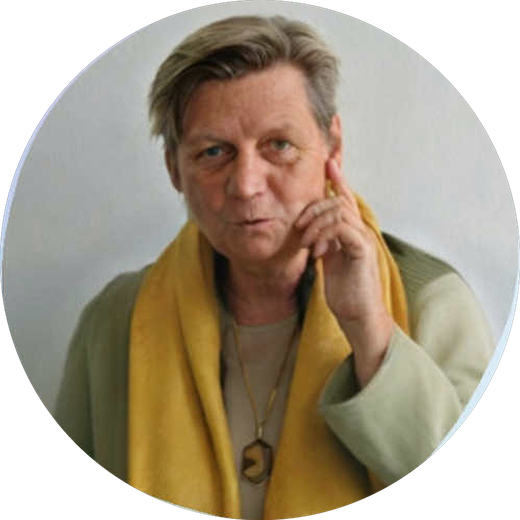
Prof. Hildrun Rolff Curriculum & teaching — on screen

Prof. Hildrun Rolff

Most people teaching art-based methods learned them from someone. Hildrun is the someone. She designed and led Germany’s first Art Therapy – Social Art degree at Alanus University — the programme that set the professional standard other practitioners across Europe and Asia were then trained inside.

Forty years of accompanying people through art, movement, and the patterns their lives left behind. Her method is trauma-sensitive by construction, not by disclaimer: the body leads and the naming follows, never the other way round. That sequence is the whole reason this work stays safe when it goes deep.

  • Founder of Germany’s first Art Therapy – Social Art degree, Alanus University
  • Forty years in art therapy, art-based coaching and university teaching
  • Has taught practitioners across Europe and Asia
  • Specialist in biographical and trauma-sensitive method

Every one of the five afternoons follows her curriculum, with her lectures filmed for this programme — so you get the full method across six months rather than one compressed visit a year.

Honey Khor Live facilitation — in the studio

Honey Khor

Honey trained inside the same German lineage — a two-year Art Therapy foundation from Alanus Hochschule, advanced study at the Tobias School of Art and Therapy in the UK, and a clinical internship in Berlin. She has the artistic soul of an artist, with a Fine Art diploma from the Malaysian Institute of Art.

She is very open and receptive — which is what this work asks for more than anything. It’s also why the method lands in a Malaysian room: she can hold a European approach without translating your life into a European frame. The family expectations, the filial weight, the things you don’t say out loud.

  • Two-year Art Therapy foundation, Alanus Hochschule, Germany
  • Advanced study, Tobias School of Art and Therapy, UK
  • Clinical internship, Berlin
  • Diploma in Fine Art, Malaysian Institute of Art
  • Twenty years in creative and therapeutic practice

Honey is in the studio for every session, and for the six months in between. She is the person who will know your work by name.

Why we’re telling you this plainly. Hildrun teaches from Germany. Rather than compress her into a single annual visit, her lectures are recorded and Honey works with you live in the studio — every session, for six months. You get the depth of the method and a facilitator who is actually there. We’d rather you knew that now than found out on the day.

The series — all five afternoons RM1,580

Early bird, booking on your own.

Early bird closes 30 September 2026
  • Come with someoneRM 100 off each, booked together before 30 September
    RM 1,480 each
  • StandardFrom 1 October 2026
    RM 1,880
  • Standard, in a pairFrom 1 October 2026
    RM 1,780 each

Paying in three: one third on registration, one third at the first afternoon, one third at the third.

Register for the series

Organisations and employers: the corporate rate is RM 2,080 per participant, minimum two participants, and covers claim administration, attendance reporting and invoicing. Write to us for the programme outline and paperwork.

What’s included
  • Five facilitated afternoons, four hours each
  • All materials — clay, paper, pigment, everything you’ll work with
  • Tea break each session
  • Your Future Art Lifeline and the pieces you make, to take home
  • Certificate of completion
  • Small group — capped at 16 places

Continuing further? Whatever you pay for this series is credited in full against tuition for the Biography Based Coaching diploma if you enrol for the April 2027 intake. Credit valid until 30 April 2027.

If you want to go further

This is the doorway to the full diploma.

Each afternoon opens one way of looking at a life — body, patterns, relationship, identity, and how experience becomes method.

The full diploma — Biography Based Coaching — takes ten of those across fourteen months of hybrid study, ending in an international certification. You don’t need to decide anything now. Come and find out what the work is actually like first — that’s what this is for.

About the diploma

Take it away and think

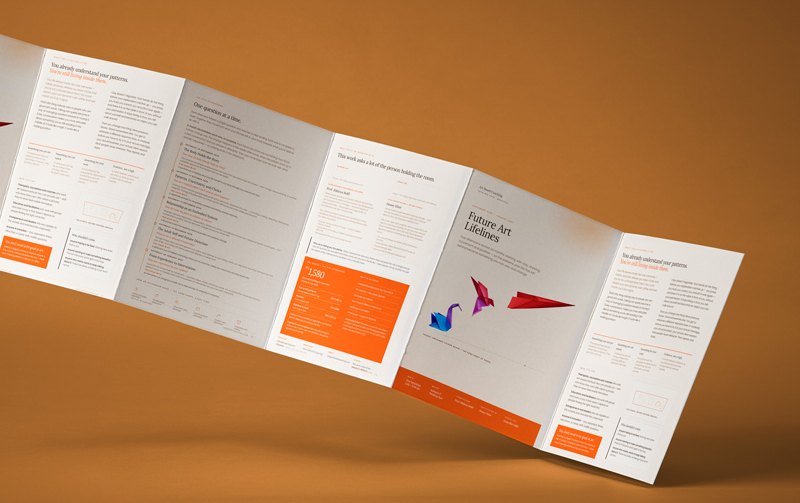
The brochure, if you’d rather read it properly.

Everything on this page, plus the full session outlines, dates, fees and what to bring — in one PDF you can send to a partner, a supervisor or an HR manager.

Need something for your employer instead? Ask for the corporate pack and we’ll send the outline, rates and paperwork.

The Future Art Lifelines brochure, opened out Four pages · everything on this site, in one PDF
Before you register

Questions people ask.

Do I need any art experience?

No. Artistic skill isn’t required and nothing is judged on how it looks. A line, a colour, a shape you press into clay — these carry meaning whether or not you can draw.

Do I have to attend all five?

Each afternoon is complete in itself, so you won’t be lost if you miss one. But the month between sessions is the actual mechanism — it’s where you test what surfaced against real life and bring the result back. Miss two and you have a set of interesting afternoons rather than a change. If you know in advance you’ll miss a date, tell us when you register and we’ll talk through how to catch up.

Why not run it as one intensive week?

Because intensives are easier to sell than they are to survive. A week produces a peak, and peaks fade — usually right when you need the new response most. Spreading the work across six months means the change gets tested in your ordinary life, repeatedly, with somewhere to bring the result. It is slower. It is also the reason it holds.

Will I have to share personal things with the group?

Sharing is always yours to choose. Much of the work happens in the making, not the talking, and it stays useful whether or not you say anything about it.

Is this therapy?

No. It’s art-based coaching — focused on awareness, patterns and direction rather than diagnosis or clinical treatment. If something surfaces that needs clinical support, Honey will say so and help you find it.

Why is Prof. Rolff on video rather than in the room?

She teaches from Germany. Recording her lectures means you get her full curriculum across all five sessions rather than a single compressed visit — and a facilitator who is physically with you for the whole six months. We’d rather be clear about that than have you find out on the day.

Why is the fourth session on a Wednesday?

Because it is a national public holiday, so most people are already off work and nobody has to take leave. It also falls during Ramadan — we finish at maghrib and break fast together at the studio for anyone who is fasting. The date follows the gazetted holiday and will be confirmed nearer the time.

What if I want to come with a friend or colleague?

Book together before 30 September and you each pay RM 1,480 instead of RM 1,580. The saving is small; the reason to do it isn’t. Six months is a long time, and having one person in the room who knows what your November was actually like changes what you’re willing to bring in. Put both names on the same registration.

Can my employer pay for this?

Often, yes. The corporate rate is RM 2,080 per participant with a minimum of two, which covers claim administration, timestamped attendance reporting and invoicing. Write to us at info@artbasedcoaching.com and we’ll send the programme outline and the paperwork your HR team will need.

What if I want to continue afterwards?

Whatever you paid for this series is credited in full against the Biography Based Coaching diploma if you enrol for the April 2027 intake, up to 30 April 2027. There’s no obligation, and nobody will chase you.

Five afternoons. One question at a time.

Places are limited to sixteen. Registration is open for the October start.

Register for the series

What you carry out of the room